Breath-hold training · iPhone + Apple Watch
A deeper
breath.
Measure your max. Train O₂ and CO₂ tables built around it. Watch your heart rate drop with every hold.
Check your inbox.
We've sent you a confirmation link. Confirm it to keep your spot, and you'll get a personal invite link that moves you up the list.
Coming soon to the App Store. Pay once, no subscription.
How it works
Three steps.
Then it trains you.
- 01
Measure your max.
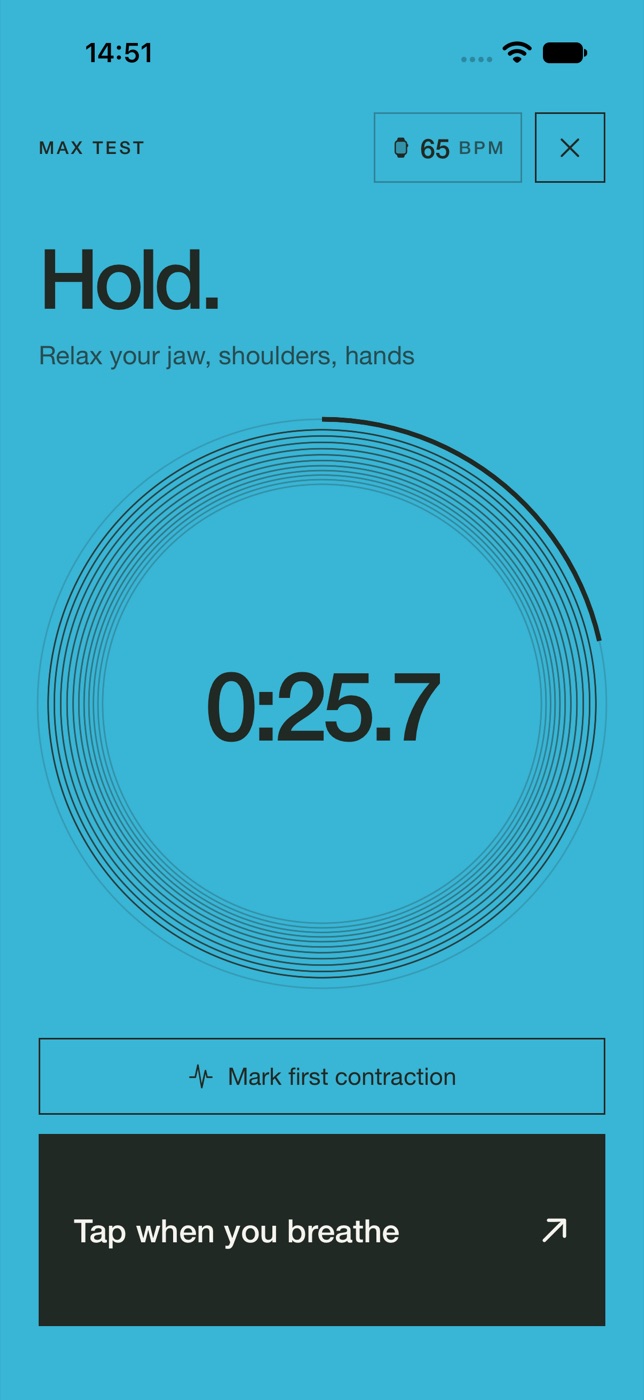
A guided breathe-up, then a stopwatch hold. Mark your first contraction and tap when you breathe. Guided recovery breaths follow.
- 02
Train the tables.
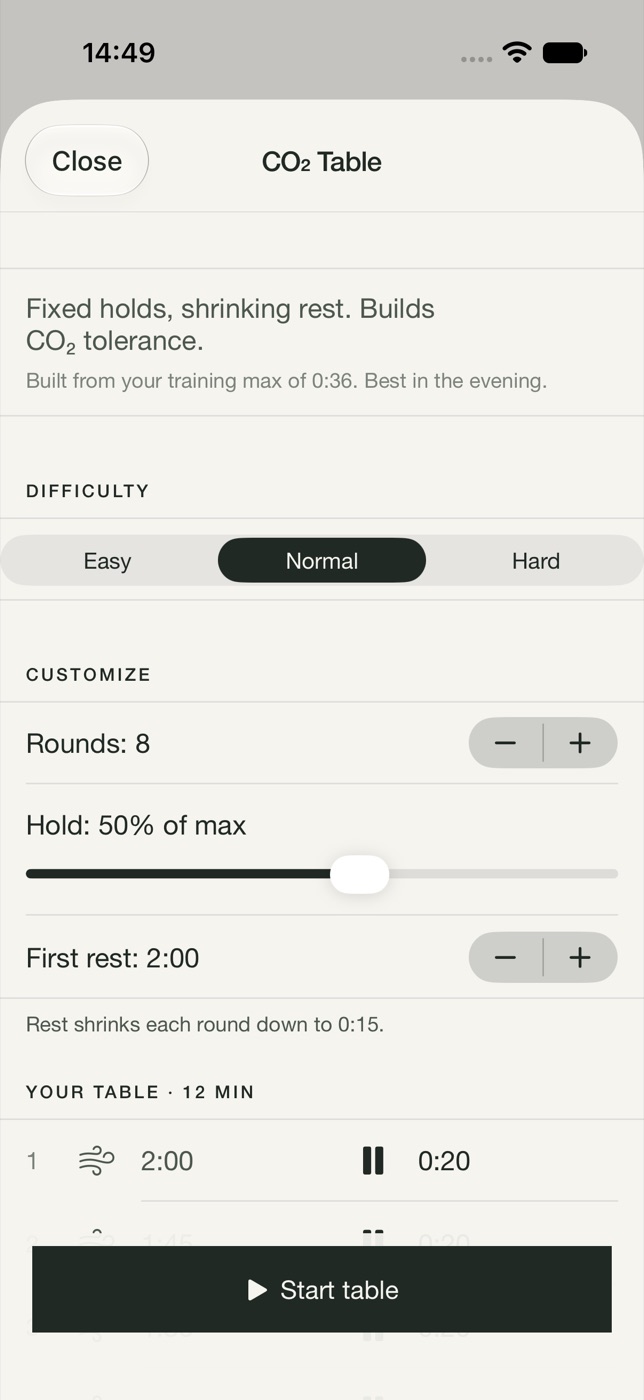
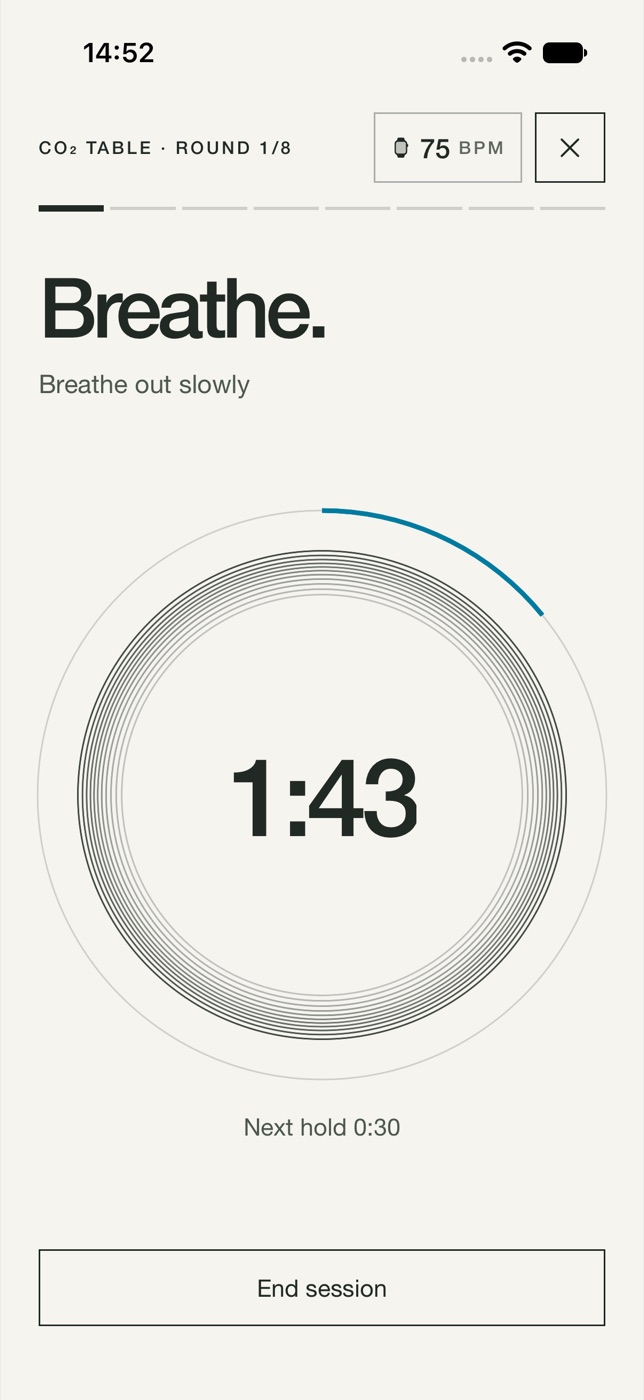
CO₂ tables keep the hold fixed and shrink the rest. O₂ tables keep the rest fixed and grow the hold. Both are built from your max.
- 03
Get better, automatically.
Finish a table and the next one is 3% harder. Tap out and it eases off. A new max resets everything around you.
During a hold
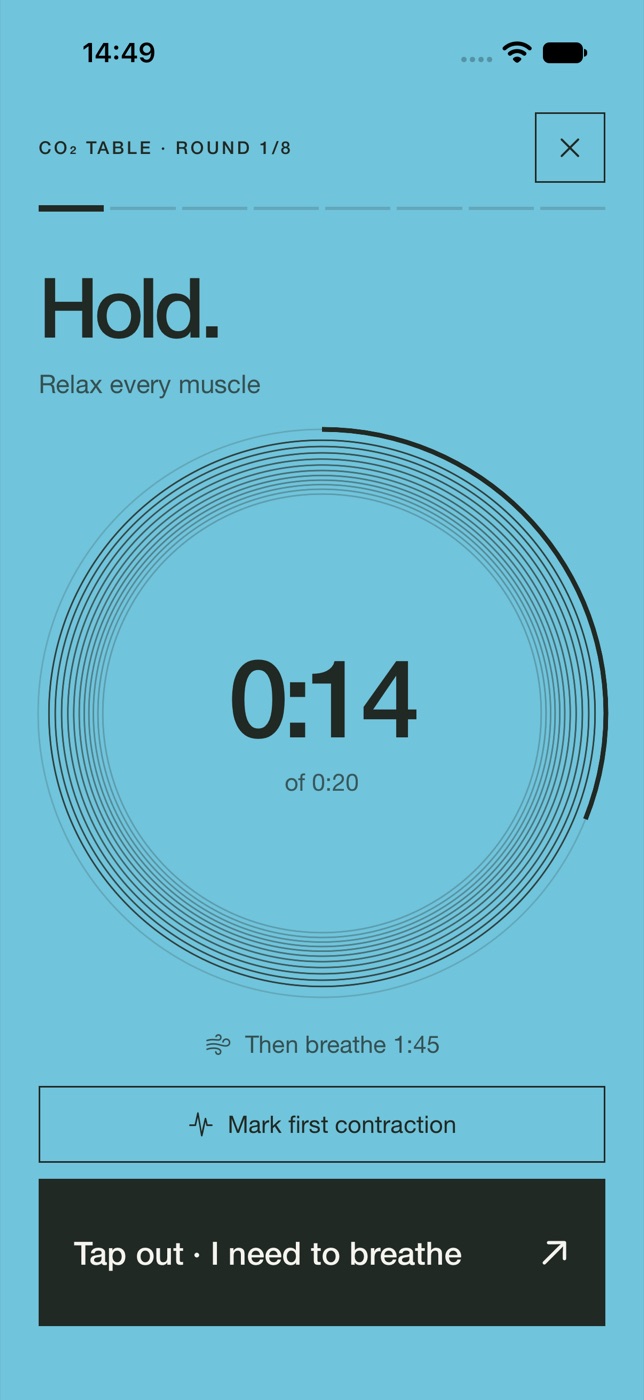
Hold.
The screen turns sky blue and gets out of your way. A big clock, a first-contraction marker and one large button to tap out.
- Voice and haptic cues, so you can close your eyes.
- Tap out any time. The session still counts.
- The screen stays awake, and timing survives the background.
Heart rate
See your dive reflex.
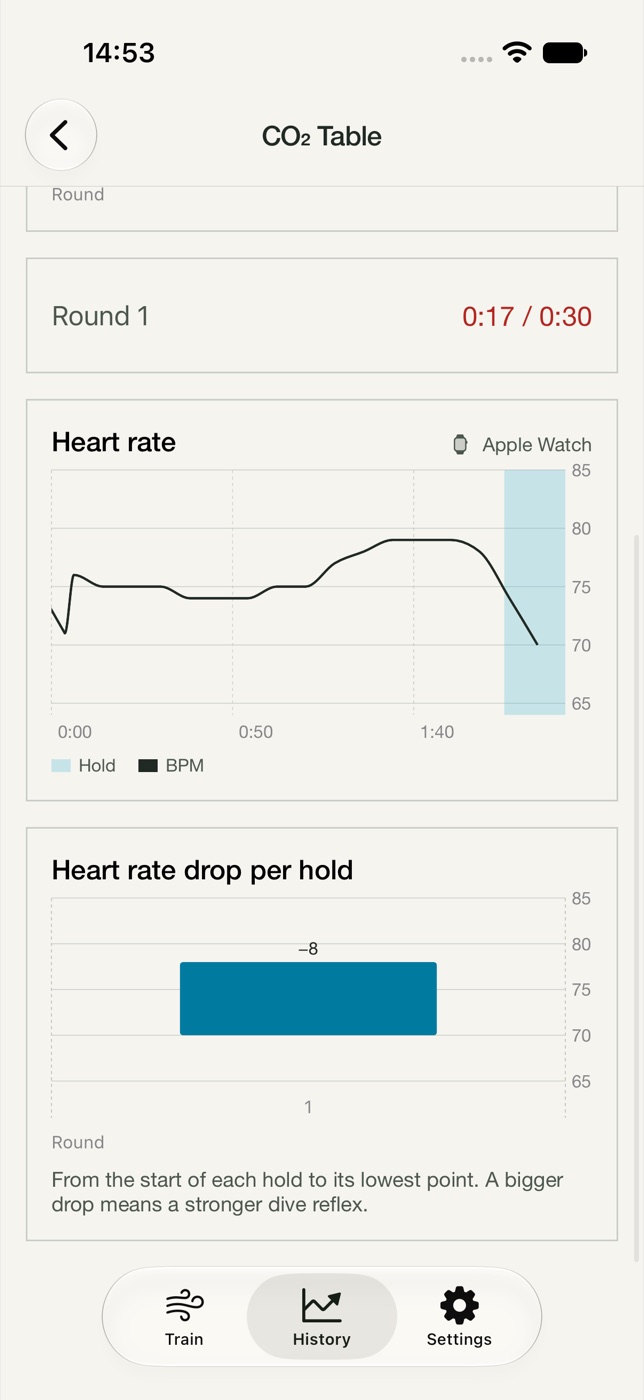
Your heart slows down when you hold your breath. BreathCoach shows it live, then charts the drop for every hold so you can see it get stronger.
- Apple Watch: the app opens on your wrist with a big tap-out button.
- Chest straps, Garmin and Polar watches over Bluetooth.
- Sessions saved to Apple Health as Mindful Minutes, if you want.
Who it's for
Whatever you're
training for.
Freedivers and spearfishers.
Build CO₂ tolerance on land, so your time in the water is spent diving.
Surfers.
Hold-down training for big days, without the big days.
Swimmers and underwater sports.
Longer underwater sections, calmer turns, better control.
Calm under pressure.
Slow breathing and long exhales, ten minutes a day.
Static apnea.
Push your max with structured, adaptive tables.
Data people.
Contraction times, heart-rate drop and every round, charted.
Safety first
Train on land.
Always.
Blackouts happen without warning. BreathCoach is built for dry training, and it says so before your first session.
- Never in or near water. Not in a bath, a pool or the sea.
- Sit or lie down. Never while driving or standing.
- Listen to your body. Stop at tingling, tunnel vision or confusion.
- Progress slowly. One table a day at most. Rest days count.
- BreathCoach is a training tool, not medical advice. Check with a doctor if you have heart, lung or blood-pressure conditions, or are pregnant.
Privacy
Your data stays yours.
No account. No ads. No tracking. The app never connects to the internet. Your sessions live on your iPhone and nowhere else.
Questions
Good to know.
When does BreathCoach launch?
Soon. The app is built and being readied for the App Store. Everyone on the waitlist hears first, on launch day.
How much will it cost?
One price, paid once on the App Store. No subscription, no account, no ads. Joining the waitlist is free.
Do I need an Apple Watch?
No. Everything works on iPhone alone. An Apple Watch, a chest strap, or a Garmin or Polar watch adds live heart rate.
Is there an Android version?
iPhone comes first. If you're on Android, pick it in the waitlist questions. It tells us how many of you there are.
Is breath-hold training safe?
Done on land, sitting or lying down, it's how freedivers train. Never practise breath holds in or near water, and stop if you feel unwell. See the safety rules above.
What are O₂ and CO₂ tables?
Classic apnea training plans. CO₂ tables keep holds the same and shorten the rest, so you get used to the urge to breathe. O₂ tables keep the rest the same and lengthen the holds, so you get used to lower oxygen.
What happens to my email?
We use it to tell you when BreathCoach launches, plus the occasional waitlist update. Nothing else, and nobody else gets it. Unsubscribe from any email.